
When Powdered Sugar Is Gluten-Free—and When to Look More Closely
Pure sugar has no gluten, but commercial icing sugar may contain starch or other additives and face cross-contact during manufacturing or handling.
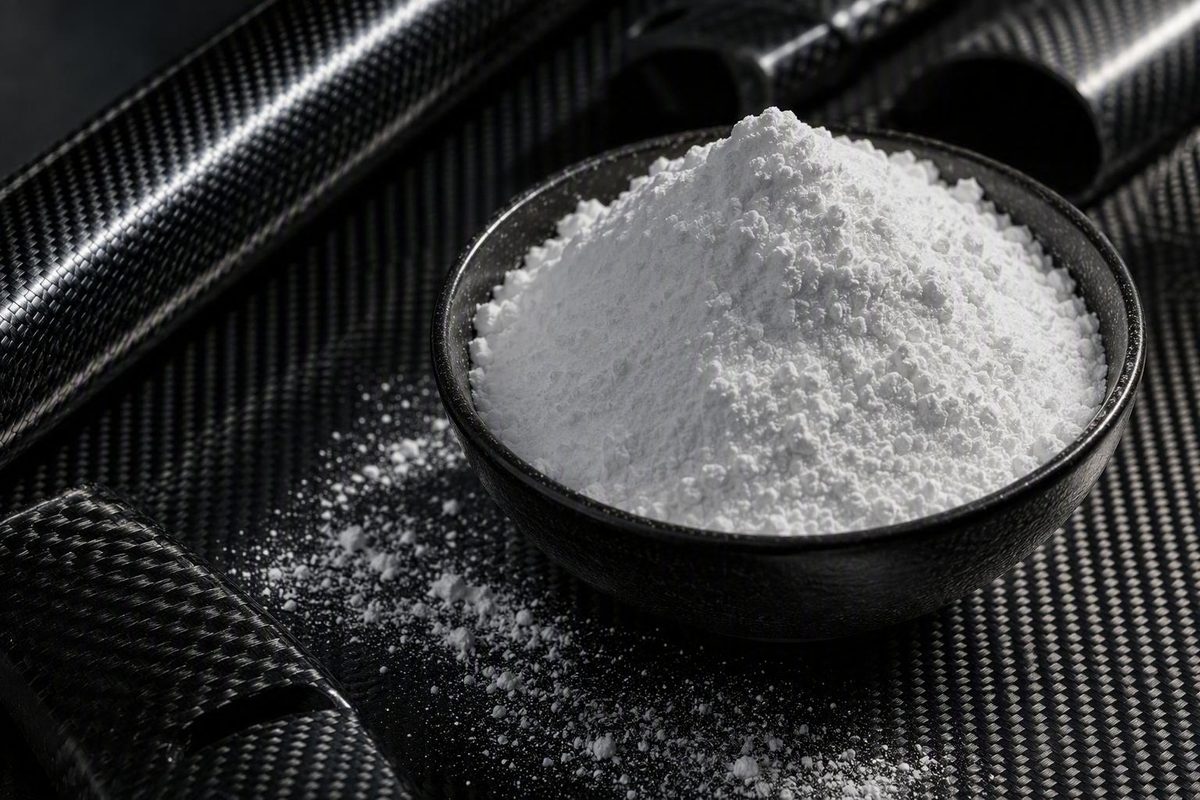
The short answer: icing sugar is usually gluten-free
Most icing sugar is gluten-free, but the answer is not universal. Pure sugar contains no gluten; commercial icing sugar may also contain starch or other additives, and its suitability can be affected by cross-contact during manufacturing or handling.
Sugar made from sugar cane or sugar beets is naturally gluten-free. Grinding granulated white sugar into a powder does not create gluten. However, manufacturers may add an anti-caking ingredient to prevent clumping, and wheat starch is occasionally used. Beyond Celiac’s powdered-sugar guidance therefore describes powdered sugar as gluten-free most of the time rather than in every case.
“Icing sugar,” “powdered sugar,” and “confectioners’ sugar” are generally different regional names for the same basic ingredient: granulated white sugar milled into a very fine powder. The names do not guarantee an identical recipe. One product may contain only sugar, while another may contain sugar plus an anti-caking agent.
For routine gluten avoidance, a product made from sugar and a clearly named gluten-free starch may be suitable. When preparing food for someone with celiac disease or another need for strict gluten avoidance, check the current physical package rather than relying on the general rule.
Use this initial checklist:
- Look for a current gluten-free designation on the exact product.
- Read the entire ingredient list.
- Identify the source of any starch or anti-caking agent.
- Review wheat-allergen and shared-equipment information.
- Contact the manufacturer if an important uncertainty remains.
The central point is simple: the sugar itself is not the concern. The questions are what has been added and whether the product may have encountered gluten during production, packaging, storage, or use.
What is in commercial icing sugar?
Icing sugar is made by milling granulated white sugar into a fine powder. The smaller particles readily take up moisture and can form lumps, so manufacturers may add a small quantity of an anti-caking ingredient to help the sugar remain free-flowing.
Cornstarch is common, but it is not the only possibility. Depending on the product and market, a package may list maize starch, tapioca starch, potato starch, arrowroot, tricalcium phosphate, wheat starch, or another permitted ingredient.
Beyond Celiac identifies cornstarch, potato starch, and tricalcium phosphate as anti-caking agents used in powdered sugar. It also notes that wheat starch can be used, although less commonly.
Tapioca starch is another gluten-free anti-caking option identified in Salted Plains’ overview of powdered sugar.
Arrowroot is likewise identified as a gluten-free starch in Sweets & Thank You’s sugar guide.
The following table is a practical label-reading guide, not a universal formulation standard:
| Ingredient on the package | Evidence-supported gluten status | Recommended response |
|---|---|---|
| Cane sugar or beet sugar | Naturally gluten-free in pure form | Check the remaining ingredients and relevant cross-contact information |
| Cornstarch or maize starch | Gluten-free | Usually not an ingredient-level gluten concern; continue reading the label |
| Tapioca starch | Gluten-free | Usually suitable from an ingredient standpoint |
| Potato starch | Gluten-free | Usually suitable from an ingredient standpoint |
| Arrowroot or arrowroot starch | Gluten-free | Usually suitable from an ingredient standpoint |
| Tricalcium phosphate | May be used as an anti-caking agent | Do not infer the status of the whole product from this ingredient alone |
| Wheat starch | Requires closer examination | Check for a regulated gluten-free claim, apply the rules in the country of sale, and seek clarification if needed |
| Unqualified “starch” | Its meaning depends on the regulator and jurisdiction | Apply the relevant local labeling rules or ask the manufacturer |
| Flavorings or specialty additives | Product-dependent | Assess each addition instead of transferring the status of plain sugar to the specialty product |
The distinction between “pure icing sugar” and an “icing sugar mixture” can be useful, but those terms do not establish one universal recipe. In some product ranges, “pure” identifies a sugar-only product, while an “icing mixture” contains sugar plus starch. The added starch may still be gluten-free.
A general description of how icing sugar is usually made cannot determine whether the package in your cupboard is suitable. The ingredient panel and claims on that package are the relevant starting points.
The three questions that determine whether a product is suitable
A practical assessment separates three issues that are often mistakenly treated as one.
1. Is the base sugar gluten-free?
If the base is ordinary cane sugar or beet sugar, yes. Pure sugar does not contain gluten, and grinding it into a finer consistency does not change that status.
A package containing only finely milled sugar therefore has no ingredient-level gluten concern arising from the sugar itself. That answers the first question, but not necessarily the other two.
2. Are all added ingredients suitable?
Commercial icing sugar often contains an anti-caking ingredient. Named corn, maize, tapioca, potato, or arrowroot starch does not introduce gluten.
Wheat starch requires a more careful assessment. It should not be treated as equivalent to cornstarch, but its appearance on a label does not automatically settle the status of every product in every jurisdiction. The product’s gluten-free claim, the applicable labeling rules, and any manufacturer explanation all matter.
Specialty powdered products may contain ingredients beyond sugar and starch. Flavorings, decorative components, stabilizers, and other additions must be considered individually. A manufacturer’s plain icing sugar and flavored icing sugar may have different formulations or production arrangements.
This is an ingredient-level concern: something intentionally included in the recipe either contains gluten or has a status that needs clarification.
3. Could cross-contact have occurred?
A product can have no obvious gluten-containing ingredient while still leaving unanswered questions about manufacturing or packaging. Equipment, production lines, storage systems, or packing areas may also handle wheat-containing ingredients.
That possibility should not be exaggerated into a claim that all commercial icing sugar is contaminated. It is a separate issue to evaluate when strict avoidance is necessary.
Cross-contact can also happen after purchase. For example, a suitable sugar may be exposed through a scoop or measuring cup that has been used in wheat flour, or by storage in a container that previously held an unsuitable product.
It helps to distinguish three situations:
- Known ingredient concern: The package lists wheat starch or another ingredient that requires assessment.
- Potential cross-contact concern: The ingredients appear suitable, but relevant processing or handling information is incomplete.
- Reduced uncertainty: The product has a suitable ingredient list, a current gluten-free designation, and appropriate handling. These checks reduce uncertainty; they do not prove the absolute absence of gluten.
Static brand lists are poor substitutes for this assessment. The current package and current product-specific guidance are more dependable than an old article, an outdated retailer image, or a remembered recipe.
How to read an icing sugar label step by step
A label check should move from the clearest available evidence to any remaining uncertainties.
Step 1: Look for a current gluten-free claim
Begin with the physical package. A product-specific gluten-free designation is more useful than the assumption that all forms of sugar must be gluten-free.
Confirm that the claim applies to the exact item you are buying. Similar-looking pure icing sugar, soft icing mixture, flavored sugar, and non-melting sugar products can have different ingredients. Country of sale and package size may also matter.
A gluten-free statement is not necessarily the same as independent certification. If certification matters to you, look for an identifiable certification mark rather than assuming that every gluten-free claim reflects third-party review.
Step 2: Read the complete ingredient list
Do not stop after seeing sugar as the first ingredient. Read to the end of the list for starches, flavorings, or other additions.
A short list may be easier to interpret, but length alone is not a safety measure. The relevant question is whether every declared ingredient is suitable and clearly identified.
Step 3: Identify the starch source
If the label names cornstarch, maize starch, tapioca starch, potato starch, or arrowroot, the supplied evidence identifies that starch as gluten-free. Continue checking the rest of the package rather than treating the named starch as a gluten concern.
If the package lists wheat starch, avoid two opposite errors:
- Do not assume that every product containing wheat starch necessarily fails every gluten-free labeling standard.
- Do not assume the ingredient is suitable simply because it appears in powdered sugar.
Instead, look for a regulated product-specific gluten-free claim, consider the rules where the food is sold, and contact the manufacturer if the relationship between the ingredient and claim is unclear.
If the label says only “starch,” interpret that word under the labeling rules that apply to the product. A definition used by one regulator may not apply to another country or even to every category of food within the same country.
Step 4: Review allergen and shared-equipment information
Look for any declaration naming wheat and for precautionary wording about shared equipment or facilities.
The absence of a precautionary statement does not prove that cross-contact is impossible. Conversely, a shared-facility statement describes a potential route of exposure; it does not prove that every package contains gluten.
Step 5: Contact the manufacturer when uncertainty is material
Ask focused questions about the exact product rather than simply asking whether sugar contains gluten. Useful questions include:
- What is the source of the starch?
- Does the gluten-free claim apply to this exact product and package?
- Is it packed on equipment that also handles wheat?
- What cleaning or separation controls are used?
- Is the finished product tested for gluten?
- Does an independent organization certify the claim?
- Has the formulation or manufacturing location recently changed?
Include the product name, package size, country of purchase, and lot details when available. Similar products from one manufacturer may not use the same ingredients or production line.
United States caveat
For foods regulated by the FDA in the United States, the single word “starch” means cornstarch, while starch derived from wheat must be declared as “wheat starch.” In USDA-regulated foods, “starch” may refer to corn or wheat starch. If a USDA-regulated food lists only “starch” and does not carry a gluten-free claim, the National Celiac Association advises asking the manufacturer about the starch source.
These distinctions are specific to the United States. They should not be presented as rules for Australia, Canada, the United Kingdom, the European Union, or another market.
Check the physical package each time you buy. Online descriptions and saved ingredient photographs may lag behind current stock, while familiar products can be reformulated.
What people with celiac disease should consider
No general article can guarantee that an unverified icing sugar is suitable for every person with celiac disease. Ingredients, labeling, production conditions, packaging, and kitchen handling can all affect the purchasing decision.
A practical way to reduce uncertainty is to:
- Choose a product carrying a current gluten-free label.
- Prefer clearly named ingredients.
- Consider a certified gluten-free option when additional documentation is important and such a product is available.
- Review relevant wheat-allergen and cross-contact information.
- Ask the manufacturer when the answer could affect the diner’s health.
- Keep the product away from flour-contaminated utensils and containers after opening.
Certification can provide a more clearly documented form of assurance, but the evidence does not establish that certification is medically required for every person or every purchase. A manufacturer-declared gluten-free product and an independently certified product are not identical forms of evidence.
In the United States, a food may bear a gluten-free label when it meets the applicable limit of less than 20 parts per million of gluten. Some foods made with specially processed wheat starch may still qualify, so the presence of wheat starch does not automatically invalidate every regulated U.S. gluten-free claim, as the National Celiac Association’s guidance explains.
This creates an important distinction. An unlabelled product that lists wheat starch deserves further investigation. When a U.S. product lists wheat starch and carries a regulated gluten-free claim, the ingredient name alone does not settle the assessment against the product; the claim and regulatory context must also be considered.
Contact the manufacturer if you need clarification about:
- The starch source
- Shared equipment or production areas
- Cleaning and separation controls
- Supplier verification
- Finished-product testing
- Certification
- The scope of a gluten-free claim
People who need advice tailored to a diagnosis, symptoms, or individual degree of risk should consult a qualified clinician or registered dietitian. Label-reading guidance can support a purchasing decision, but it is not individualized medical advice.
Pure icing sugar, icing mixtures, snow sugar, and flavored products
Products sold together in the baking aisle do not necessarily share one formulation.
Pure icing sugar
In a product range that uses “pure icing sugar” to mean sugar only, this is the simplest formulation. There is no added starch to assess, although the package claims and handling still matter.
CSR Pure Icing Sugar is one bounded example. The manufacturer’s product page for CSR Pure Icing Sugar, accessed August 10, 2026, lists cane sugar as the ingredient and identifies that specific product as gluten-free.
Those statements apply to the named product as represented on that page. They do not establish a universal definition of “pure icing sugar,” a permanent formulation, or the status of every CSR product.
Icing sugar mixture
The word “mixture” does not automatically mean the product contains gluten.
The CSR Soft Icing Sugar Mixture product page, accessed August 10, 2026, identifies that specific product as gluten-free and lists cane sugar with tapioca or maize starch.
This example illustrates why “contains starch” and “contains gluten” are not equivalent statements. It also demonstrates why two items from the same brand should be checked separately: one product may contain sugar alone, while another contains sugar plus a gluten-free starch.
Snow sugar or non-melting powdered sugar
Snow sugar is intended to retain its appearance rather than dissolve or melt as quickly on moist baked goods. According to Beyond Celiac’s powdered-sugar guidance cited earlier, it often contains additional starches and anti-caking ingredients.
The category does not have one universal formulation in the supplied evidence. Treat snow sugar or non-melting sugar as a distinct product and read its ingredient list instead of assuming it is ordinary icing sugar under another name.
Flavored and specialty powdered products
Flavored powdered sugars, decorative dusting blends, instant icing mixes, and similar products may contain more than sugar and a basic starch. Their additional ingredients need to be assessed separately.
Do not transfer the status of a manufacturer’s plain icing sugar to a vanilla, chocolate, spiced, decorative, or non-melting version. Similar packaging and a shared brand name do not establish an identical formulation or manufacturing arrangement.
A useful product-specific interpretation is:
- Sugar only: Check the product claim and relevant handling information.
- Sugar plus a named gluten-free starch: Check the rest of the label and any material cross-contact information.
- Wheat starch: Examine the gluten-free claim and the applicable labeling rules.
- Unnamed starch: Interpret it under the rules governing that product.
- Additional specialty ingredients: Assess each addition and seek clarification where necessary.
How to interpret product-specific gluten-free claims
A current product-specific statement is more useful than a broad assumption about icing sugar, but it applies only to the named product in the relevant market.
As noted above, CSR’s product pages identify both its Pure Icing Sugar and Soft Icing Sugar Mixture as gluten-free. The pages show that the two products have different declared formulations: cane sugar alone for the pure product, and cane sugar with tapioca or maize starch for the soft mixture.
A Zone Fresh listing for CSR Pure Icing Sugar, accessed August 10, 2026, also represents that specific product as gluten-free. A retailer repeating or displaying a gluten-free claim is not independent laboratory verification, however. The listing does not establish certification, a particular test result, or dedicated-facility production.
Likewise, Cake Master markets a specific FunCakes Icing Sugar product as gluten-free. The supplied retailer information does not provide its ingredient list, certification details, gluten test results, or shared-facility information. It supports only the narrow statement that the retailer markets that named item as gluten-free.
When reviewing a product page or package, distinguish what each type of information establishes:
- A gluten-free statement on the named product: A product-specific claim
- An identifiable certification mark: Evidence of participation in that certification program
- An ingredient list: The declared formulation, but not every manufacturing condition
- A shared-equipment statement: Information about a potential processing route
- A testing statement: Useful only to the extent that it explains what is tested and under what standard
- A retailer description: Shopping information, not independent verification of manufacturing controls
Do not infer features that are not documented. The cited CSR, Zone Fresh, and Cake Master pages do not establish here that the products are independently certified, tested to a particular gluten threshold, or made in dedicated gluten-free facilities.
Brand examples are best used to demonstrate a method: match the claim to the exact item, inspect the declared ingredients, identify what information is missing, and verify the current package. They should not become a permanent or comprehensive “safe brand” list.
Making icing sugar at home and avoiding kitchen cross-contact
You can make icing sugar at home by grinding granulated white sugar until it reaches a fine, powdery consistency. Depending on the quantity, suitable equipment may include a clean blender, grinder, or mortar and pestle.
Homemade preparation gives you control over added ingredients. If you grind sugar without adding starch, the recipe contains sugar only. If an anti-caking ingredient is needed, you can choose a named gluten-free starch.
That control does not automatically make the result suitable for strict gluten avoidance. The starting sugar, equipment, measuring tools, work surface, and storage container must also be appropriate.
Use granulated sugar whose package and storage history you trust. Avoid an open sugar bag that may have been entered with a flour-covered scoop or measuring cup. Grinding previously exposed sugar more finely does not remove the exposure.
Before making icing sugar for someone who strictly avoids gluten:
- Clean and dry the grinder, blender, or mortar.
- Use clean measuring cups, spoons, and utensils.
- Wipe the preparation surface.
- Use a clean storage jar or sealed container.
- Label the finished sugar clearly.
- Keep it separate from utensils or containers used in wheat flour.
In a kitchen that regularly handles wheat flour, maintaining a separate, clearly marked sugar package or container can reduce opportunities for cross-contact. Keeping a clean scoop with that sugar also avoids moving measuring tools directly between flour and sugar. This clean-or-separate-tool approach is consistent with the kitchen guidance in the Sweets & Thank You sugar guide.
The distinction is between ingredient control and cross-contact control. Making icing sugar at home can improve control over the ingredients. Careful sourcing, cleaning, handling, and storage are still needed to address cross-contact.
Frequently asked questions
Are icing sugar, powdered sugar, and confectioners’ sugar the same thing?
Generally, yes. The terms ordinarily describe granulated white sugar milled into a very fine powder. “Icing sugar” is common in some countries, while “powdered sugar” and “confectioners’ sugar” are common in others.
The names do not guarantee the same formulation. One package may contain only sugar, while another includes cornstarch or a different anti-caking ingredient. Specialty products such as snow sugar may contain additional ingredients.
Treat the terms as broadly equivalent descriptions, then use the package to determine what the specific product contains.
Does cornstarch in icing sugar contain gluten?
Cornstarch is gluten-free. If an icing sugar lists sugar and cornstarch, the cornstarch is not an ingredient-level gluten concern.
The whole product still needs to be considered when strict avoidance matters. Read the complete ingredient list, look for a current product-specific gluten-free claim, and protect the sugar from contact with flour-contaminated utensils after opening.
For the regulatory meaning of the unqualified word “starch” on a U.S. package, see the United States caveat above. That U.S. interpretation should not be transferred automatically to other markets.
Does wheat starch always mean a product cannot be labeled gluten-free?
No—not in every jurisdiction or regulatory context. In the United States, some products made with specially processed wheat starch may carry a gluten-free label if the finished food satisfies the applicable standard.
The practical distinction is between an unexplained wheat-starch ingredient and wheat starch in a product carrying a regulated, product-specific gluten-free claim. Check the claim, apply the rules in the country of sale, and ask the manufacturer if the product’s status remains unclear. The U.S. threshold and source guidance are explained in the celiac and labeling sections above.
Is CSR icing sugar gluten-free?
CSR identifies its Pure Icing Sugar as gluten-free and lists cane sugar as its ingredient.
CSR also identifies its Soft Icing Sugar Mixture as gluten-free and lists cane sugar with tapioca or maize starch.
These statements apply to those named products as represented on the manufacturer’s pages accessed August 10, 2026. They are not a guarantee for every CSR product, every market, or a future formulation. The available pages also do not establish independent certification, a particular test result, or production in a dedicated gluten-free facility. Check the current physical package before use.
Can I make gluten-free icing sugar from granulated sugar?
Yes. Begin with suitable granulated white sugar and grind it into a fine powder using clean equipment. You can leave it as sugar only or add a named gluten-free starch if the recipe or storage method calls for one.
Homemade preparation controls what you add, but it does not reverse previous cross-contact. Avoid sugar that may have been entered with a flour-covered utensil, and clean the equipment, measuring tools, work surface, and storage container before beginning.
In practical terms, icing sugar is usually gluten-free because pure sugar contains no gluten. Commercial products still need to be checked for additives and relevant cross-contact information. Use a four-step rule: look for a current gluten-free designation, identify the starch and other additives, review allergen or facility information, and contact the manufacturer when uncertainty matters.
For someone with celiac disease, rely on the current package and current product-specific guidance—not a generic brand list, an old retailer image, or a remembered formulation.