
Choosing an Epoxy System That Fits Your Carbon-Fiber Process
Viscosity, working time and cure route matter more than a generic label. Carbon fiber can stop UV light from reaching resin inside a laminate.
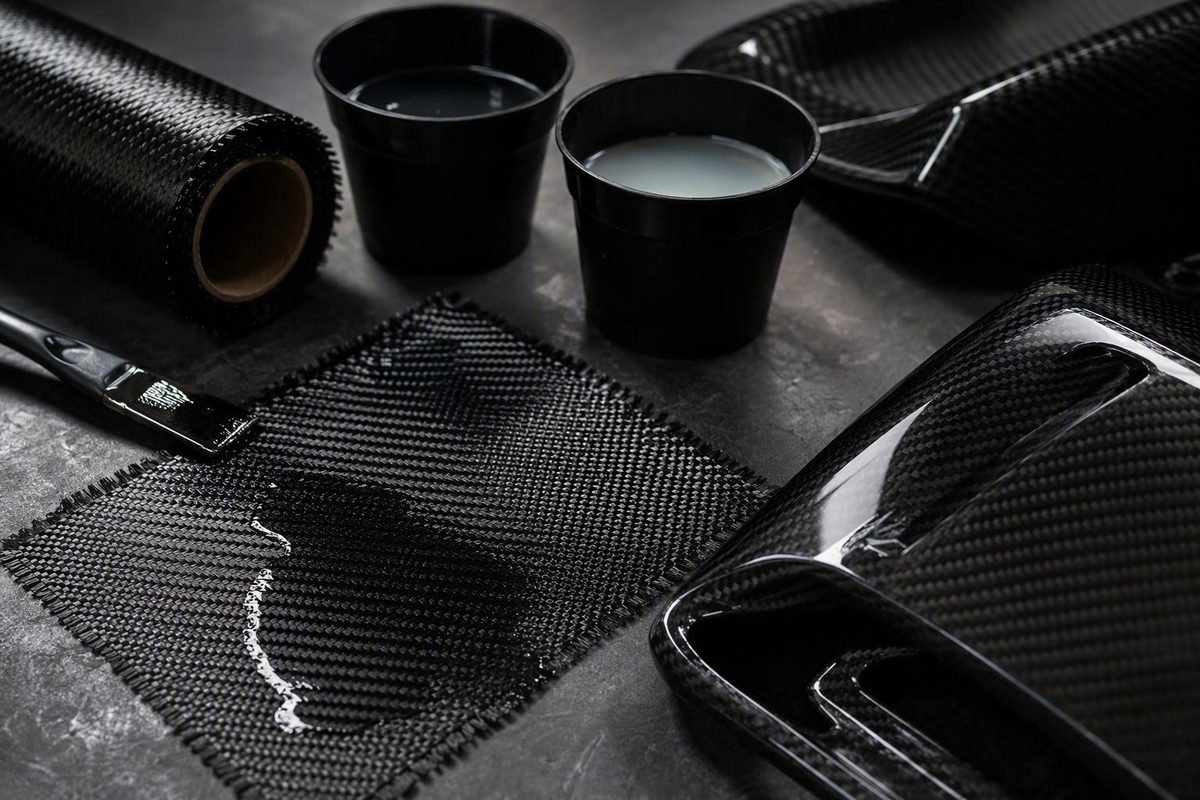
“Carbon fiber epoxy” can mean a resin system, a reinforcement-and-resin kit, an uncured layup, or a finished composite. Those are not interchangeable products. The right choice depends on what is being made, how the resin must enter and wet the reinforcement, how long the layup will take, what cure equipment is available, and what the finished part must withstand.
A hand-laminating resin may be unsuitable for a large infusion. An infusion resin may not stay in a damaged edge that needs a non-sag filler. A clear coating can create an attractive surface without supplying the properties required of a structural laminate. A nominally high-temperature epoxy may also fall short of its published thermal capability if it does not receive the prescribed cure or post-cure.
Selection should therefore begin with the process and service environment—not with a generic label or an unsupported claim that one epoxy is best for every carbon-fiber application.
What “carbon fiber epoxy” actually means
Carbon fiber is the reinforcement. It may be supplied as woven fabric, unidirectional material, braid, chopped fiber, or another architecture. Epoxy is the polymer matrix formed when compatible resin and hardener are proportioned, mixed, and cured. They become a carbon-fiber-reinforced composite only after the matrix has combined with the reinforcement and solidified.
The constituents perform different functions. Carbon fibers provide direction-dependent reinforcement. The matrix binds the fibers, maintains their position, and helps transfer loads among them. Depending on its formulation, it can also contribute toughness, chemical or corrosion resistance, and environmental protection. It can impose limits as well: if the matrix softens, cracks, or loses adhesion in service, the fibers alone cannot preserve the intended behavior. Exel Composites’ guide to resin choice similarly identifies binding and fiber positioning as central matrix functions.
Dry carbon-fiber fabric contains no laminating resin. It must be combined with a separately selected system during wet layup, infusion, resin-transfer molding, or another process.
Prepreg is different. Its reinforcement already contains a controlled quantity of partially cured resin. It should not be treated as ordinary dry fabric or mixed on the bench like a conventional two-part laminating system.
A finished laminate is not characterized by “carbon fiber” or “epoxy” alone. Its behavior depends on:
- Fiber grade, orientation, and continuity
- Woven, unidirectional, braided, chopped, or hybrid architecture
- Number and sequence of plies
- Resin formulation and compatibility with the fiber sizing
- Fiber and resin content
- Wet-out and consolidation quality
- Cure schedule and cure completion
- Voids, wrinkles, contamination, resin-rich areas, and other defects
- Part geometry, joints, holes, edges, load direction, and service environment
This distinction is especially important when reading technical data. A supplier may publish tensile strength, modulus, elongation, shrinkage, or glass-transition temperature for neat resin—the cured polymer tested without carbon-fiber reinforcement. Those figures are not the mechanical or thermal properties of a completed carbon-fiber laminate.
A meaningful laminate comparison must identify the reinforcement, ply arrangement, resin content, processing method, cure schedule, specimen configuration, conditioning, and test method. If those details are absent, the data should not be used as though they described the proposed part.
Match the epoxy type to the manufacturing task
The first useful question is not “Which epoxy is strongest?” It is “What must the uncured resin do during this process?” Flow, working time, film behavior, filler content, and cure route can matter as much as a headline cured-resin property.
Commercial catalogs show that laminating, infusion, coating, repair, tooling, and elevated-temperature epoxies are sold as distinct categories. That establishes that different product types exist; it does not validate every seller claim or create a brand ranking. Easy Composites, for example, lists separate epoxy categories for laminating, infusion, coating, filling, repair, and high-temperature work.
| Manufacturing task | Suitable starting category | What to prioritize | Common selection mistake |
|---|---|---|---|
| Hand laminating | Laminating epoxy | Sufficient working time to wet, place, and consolidate every ply; manageable viscosity; compatible cure conditions | Choosing from a generic pot-life label without considering total layup time, batch size, and temperature |
| Vacuum infusion | Infusion epoxy | Low viscosity at the stated process temperature, enough flow time, predictable gel behavior, and compatibility with reinforcement and consumables | Using a coating, casting, or filled resin that is not intended to traverse a reinforcement stack |
| Cosmetic skinning or clear coating | Compatible basecoat and coating resin, or a documented laminating-and-finish system | Surface wetting, film build, clarity, cure compatibility, sanding or recoating requirements, and exterior protection | Assuming “clear” or “UV stable” guarantees indefinite outdoor durability |
| Localized filling and repair | Sandable repair adhesive, paste, or carbon-filled compound | Gap-filling behavior, non-sag application, adhesion to the prepared substrate, machinability, and repair-specific cure instructions | Expecting low-viscosity infusion resin to behave like a structural filler |
| Elevated-temperature fabrication | Formulation documented for the required process and service condition | Cure and post-cure schedule, glass-transition data, service-temperature definition, thermal exposure, and available cure equipment | Assuming every “high-temperature” label represents the same cured capability |
For hand layup, available time must cover the complete operation: preparing any specified resin coat, positioning the visible ply, wetting subsequent plies, correcting distortion, and consolidating the stack. A resin that gels before the final plies are wetted is unsuitable even if its neat-resin data appear impressive.
For vacuum infusion, resin must flow through the reinforcement and reach the intended outlets before gelation. Low viscosity and sufficient flow time are therefore important, but “low viscosity” is not an infusion plan. The technical data must state the measurement temperature, and the process still has to account for laminate dimensions, reinforcement permeability, consumables, and the planned flow arrangement.
For cosmetic skinning or coating, determine whether the product is a structural laminating resin, a surface coating, a pigmented basecoat, or one component of a documented combination. A coating is selected around film and finish requirements that may differ from laminate impregnation. Gloss and clarity do not establish structural performance, while a general UV-stability claim does not establish indefinite outdoor color, gloss, adhesion, or mechanical durability.
For damaged edges or small voids, a paste or sandable carbon-filled repair compound may stay where it is placed more effectively than an unfilled laminating or infusion resin. Milled or chopped carbon in a compound does not make it equivalent to continuous, correctly oriented reinforcement. Nor does it validate a structural repair without an appropriate design and approved procedure.
For elevated-temperature service, obtain the current data sheet for the exact resin-hardener combination. Check which cure produced the published glass-transition or service-temperature result and whether that cure requires staged heating, an oven, pressure, an autoclave, or a post-cure. “High temperature” has little engineering value without a named property, test condition, and completed cure cycle.
The specifications that matter before you buy
A useful technical data sheet should connect material behavior to the proposed process. If essential information is absent, ask the manufacturer rather than filling the gaps with category averages or reseller summaries.
Use this pre-purchase checklist:
- Intended process: Hand layup, vacuum bagging, infusion, coating, bonding, filling, tooling, prepreg, or another defined method
- Viscosity: Value, test method where available, and measurement temperature
- Mix ratio: Resin-to-hardener ratio and whether it is specified by weight or volume
- Pot life: Test batch size, container conditions, and temperature
- Working time: Practical application window, particularly after the material has been spread
- Gel time: Conditions under which gel was determined
- Demold or handling time: When the part may be moved or removed without damage
- Full cure: Time and conditions needed to reach the documented cured state
- Cure temperature: Permitted ambient, oven, press, or autoclave route
- Post-cure: Required ramp, hold, cooling sequence, and timing
- Glass-transition temperature: Test method and specimen cure history
- Service-temperature limit: Whether it is continuous, intermittent, or otherwise qualified
- Shelf life: Date basis, packaging status, and required storage conditions
- Sizing compatibility: Evidence that the resin is compatible with the carbon fiber’s surface treatment
- Test basis: Whether a property belongs to neat resin, an adhesive joint, or a specified laminate
Viscosity must be matched to the task. A resin intended to traverse an infusion stack can behave very differently from a high-build coating, non-sag adhesive, or filled edge-repair compound. There is no defensible universal viscosity range for “carbon fiber epoxy.” Compare named formulations at comparable temperatures and under the intended process conditions.
Time-related specifications also need careful interpretation. Pot life generally describes a mixed quantity under stated test conditions. It is also distinct from gel time, handling time, demold time, and full cure.
A category filter may show a broad range covering many unrelated products. That range cannot be assigned to any individual formulation.
Thermal terms are similarly distinct:
- Cure temperature is the temperature used to drive the resin-hardener reaction.
- Glass-transition temperature, or Tg, describes a transition in the cured polymer’s behavior under a stated test.
- Maximum service temperature is a supplier-defined operating limit that may depend on duration, load, environment, and the criterion used.
- Post-cure is an additional controlled heating cycle required or permitted by some systems after initial cure.
Do not invent a universal operating margin between Tg and service temperature. The appropriate design limit depends on the property being protected, loading, exposure duration, test basis, and application requirements.
Advertised thermal capability may also be conditional. Compare the cure history behind the published result with the equipment and temperature control actually available.
Category pages and seller summaries are useful for screening, not specification. Products grouped together may include casting, coating, filling, infusion, tooling, and high-temperature systems. Before comparing numerical properties, look for a current technical data sheet, a named test standard, specimen conditioning, cure history, test temperature, and a clear statement of whether the result represents neat resin or a defined laminate.
Epoxy versus polyester, vinyl ester, and specialized matrices
Epoxy is not always the correct matrix for carbon fiber. It is commonly considered for high-performance work because suitable formulations are available with strong adhesion, relatively low cure shrinkage, chemical resistance, and processing versatility. Potential disadvantages include higher cost, sensitivity to correct proportioning, longer or more controlled cures, and—in some systems—the need for additional cure equipment.
Broad resin-family comparisons can help create a shortlist, but they cannot replace comparisons between named grades.
| Matrix family | Why it may be considered | Important cautions |
|---|---|---|
| Epoxy | Adhesion, relatively low shrinkage, chemical resistance, and formulations for many composite processes | Precise ratio and cure control may be critical; cost and cure equipment can be limiting |
| Vinyl ester | Potential cost-performance compromise, including consideration for chemical, moisture, marine, or industrial exposure | Performance varies by grade and exposure; broad sources disagree about its ranking against epoxy |
| Polyester | Lower cost, rapid processing, and extensive use in general composites | Commonly associated with greater cure shrinkage and lower high-end structural performance than well-selected epoxy |
| Phenolic | Fire, smoke, and toxicity priorities | Processing, finish, mechanical behavior, and qualification must be assessed for the exact grade |
| BMI or polyimide | Specialized elevated-temperature applications | Higher cost, greater process complexity, and demanding cure conditions |
| Thermoplastic matrices | Toughness, welding, remelting, rapid forming, or recyclability objectives | Impregnation and consolidation may require elevated temperatures and specialized equipment |
Vinyl ester can be attractive where chemical or moisture exposure, production economics, and impact behavior must be balanced. It should not be described as universally better or worse than epoxy. The result depends on the exact chemistry, exposure medium, temperature, cure, laminate construction, and test method.
Polyester remains common in general-purpose composite manufacturing. It can offer lower material cost and rapid processing, but it is commonly described as having more cure shrinkage and lower high-end structural performance than high-grade epoxy. That family-level observation does not prove that every epoxy laminate outperforms every polyester laminate.
Phenolic matrices are considered where fire, smoke, and toxicity requirements drive the decision. Bismaleimide and polyimide systems address specialized high-temperature applications where ordinary epoxies may be unsuitable. Thermoplastic matrices may be selected where toughness, welding, remelting, reshaping, or recyclability matters, although their impregnation and consolidation requirements differ substantially from those of room-temperature thermosets. A vendor-authored overview of carbon-fiber matrix families discusses these categories, but its qualitative rankings still require grade-specific confirmation.
Published family comparisons can disagree. One source may emphasize epoxy for moisture resistance, while another favors vinyl ester in wet or chemically aggressive service. Shrinkage rankings also vary when sources omit formulation, cure conditions, specimen geometry, and test method.
The responsible response is not to average incompatible figures. Compare named formulations using equivalent cure histories and tests relevant to the proposed service.
Complete kits, resin systems, fabric, and filled compounds
The word kit is ambiguous. A resin kit normally means epoxy resin plus the corresponding hardener. A complete project kit may additionally include carbon-fiber reinforcement, mixing supplies, release materials, or other consumables.
Commercial collections show complete kits containing resin, hardener, and reinforcement in formats including twill fabric, plain weave, hybrid fabric, and chopped carbon. Some also list products marketed for foundation-wall reinforcement. These listings establish availability, not independent proof of performance or suitability. Venom Carbon’s carbon-fiber resin-kit collection, for example, shows several reinforcement formats but does not provide all the formulation and process data needed for an engineering decision.
Material form matters:
- Woven fabric provides continuous reinforcement in the yarn directions and can be stacked into a designed laminate.
- Unidirectional reinforcement concentrates continuous fibers along selected load paths.
- Chopped carbon contains discontinuous fibers and produces different directional and load-transfer behavior.
- Milled-carbon or carbon-filled compounds can be formulated for filling, repair, or other specialized applications.
- Clear or pigmented coating systems are selected primarily for surface application and compatibility, not assumed structural equivalence.
These forms are not interchangeable merely because they all contain carbon. A decorative woven skin likewise does not automatically restore the strength of a damaged structural laminate.
For a small, noncritical project, a proportioned kit can reduce purchasing errors. The resin and hardener are intended to be paired, and the supplied quantities may be chosen for the included fabric. Convenience, however, is not the same as complete documentation. A short listing may omit the exact mix ratio, viscosity, cure cycle, reinforcement sizing, laminate properties, and shelf life.
Audit a kit before purchase:
- Obtain the current technical data sheet for the exact resin and hardener.
- Obtain the safety data sheet for every chemical component.
- Confirm the supplied resin and hardener quantities.
- Confirm the reinforcement dimensions, areal weight, weave, and orientation.
- Identify the supplied hardener speed and documented application range.
- Verify compatibility with hand layup, infusion, coating, filling, or the intended process.
- Check ambient-cure, oven-cure, pressure, and post-cure requirements.
- Confirm shelf life and storage conditions for unopened and opened containers.
- Identify missing consumables such as release materials, peel ply, bagging film, sealant tape, flow media, brushes, rollers, cups, or abrasives.
- Determine whether the documentation provides laminate-level data or only neat-resin properties.
Some product families offer fast and slow hardeners. Those names normally identify different cure or working-time options, but do not assume time is the only difference or that both combinations produce identical final properties. Check the data for the exact resin-hardener pairing and cure schedule.
Prices, promotions, shipping charges, and current inventory are poor evergreen selection criteria. Compare total process requirements, documentation, likely waste, storage life, and required consumables instead.
A practical wet-layup workflow
A basic wet layup combines dry carbon-fiber reinforcement with mixed epoxy directly on a mold or prepared substrate. Exact instructions must come from the selected materials, but the general sequence is consistent.
-
Prepare the mold or substrate. The surface should be stable, clean, and compatible with the resin and intended finish. Molded parts require a release system compatible with the mold and resin. Repair work must follow the applicable material or repair procedure rather than a generic surface-preparation recipe.
-
Apply the specified release system when molding. Follow the release-product instructions rather than assuming a universal layer count. In Composites Canada’s wet-layup tutorial, the example uses four to five layers of its selected mold-release product. That number belongs to that tutorial and should not be generalized to other release systems.
-
Cut and organize all plies before mixing. Woven twill can distort and fray. One practical method is to make a small snip at the edge, pull a yarn from the weave, and cut along the straight line it reveals. Prepare equal sections where the design requires them, label orientations if necessary, and arrange the plies in application order.
-
Protect the visible ply. The first ply against the mold becomes the visible surface in many molded parts. Keep it free of dust, loose fibers, hair, damaged yarns, folds, and unintended distortion.
-
Measure resin and hardener. Use the manufacturer’s specified ratio and measurement basis. If the ratio is by weight, use a suitable scale. Do not silently convert a weight ratio into a volume ratio.
-
Mix thoroughly. Scrape the sides and bottom of the container. Follow any product instruction to transfer the mixture to a second clean cup and mix again. The Composites Canada tutorial suggests mixing for about three minutes for its particular starter-kit system; that is an example, not a universal mixing time.
-
Coat or wet the mold as specified. Some workflows apply an initial resin coat before the first fabric ply. Others use a separate coating or surface system. Treat the mold, release product, resin, and any coating as a compatible process rather than combining unrelated instructions.
-
Place and wet each ply. Position the visible ply without stretching or skewing the weave. Wet it completely before placing the next layer.
-
Consolidate using the documented process. Use the brush, roller, squeegee, vacuum bag, or other method specified for the material and laminate. Avoid changing reinforcement orientation while working the layup.
-
Cure under controlled conditions. Protect the layup from contamination and maintain the specified environment. The cited tutorial uses 21–25°C for its kit and directs readers to the manufacturer’s label for cure duration. Both the temperature and procedure are product-specific examples, not default settings for other epoxies.
-
Demold only when permitted. A part may be firm enough to remove while still short of its documented final state. Follow the selected system’s handling, demold, and post-cure instructions before machining, loading, or placing the part in service.
Resin quantity, mixing accuracy, and cure planning
Required mixed resin depends on more than surface area. The estimate should account for reinforcement area, areal weight, number of plies, intended resin content, processing method, material retained in consumables, transfer losses, container residue, and a reasonable allowance for the chosen process.
The supplier tutorial discussed above gives a rough example pairing 50 grams of fabric with 50 milliliters of resin. That is a kit-specific approximation, not a universal conversion. It equates a mass with a volume without supplying resin density and does not establish the fiber-to-resin ratio in the cured laminate. See the tutorial for the original wet-layup example.
There is therefore no single resin calculator or universal target ratio that can responsibly be applied to every hand layup, vacuum-bagged laminate, or infusion. Use the manufacturer’s coverage or process guidance for the exact reinforcement and method. If the requirement remains uncertain, make a small representative trial or witness coupon and record actual material use.
Mixing accuracy is essential. Resin and hardener must be proportioned according to the manufacturer’s stated ratio and stated basis—weight or volume. Epoxy depends on the intended chemical proportion, and an incorrect ratio or inadequate mixing can leave unreacted resin or hardener in the matrix.
Plan each batch around:
- Total layup area and number of plies
- Ambient and material temperature
- Documented working time under those conditions
- Time needed for placement and consolidation
- Mixed quantity
- Laminate scale
- Number and experience of available operators
- Whether sequential batches are permitted
- Cure-equipment capacity and temperature control
The supplied evidence does not establish universal batch-size, casting-thickness, or exotherm limits. Use the formulation’s own restrictions rather than improvised numerical rules.
Before starting, verify whether the system reaches its documented state through ambient cure alone or requires an oven, pressure, vacuum, an autoclave cycle, or a post-cure. Confirm that the mold, core, inserts, release system, and consumables are suitable for that complete cycle.
Quality checks and defensible troubleshooting
Use it as a process check, supported by the product instructions and a record of what was actually done.
| Observation | What can responsibly be checked |
|---|---|
| Dry or incompletely wetted reinforcement | Whether every layer was wetted before the next was placed and whether the layup stayed within the documented working time |
| Trapped air or visible voids | Where the indication appears and what consolidation method was used |
| Resin-rich regions | Whether resin use differed from the plan and whether the reinforcement remained in position |
| Fabric movement or distortion | Whether the intended orientation and coverage were preserved |
| Surface contamination | Whether foreign material or unintended contact was recorded during preparation, layup, or cure |
| Tacky or apparently incomplete cure | Mix ratio, measurement basis, mixing procedure, actual cure temperature, and elapsed cure time |
These checks organize an investigation; they do not establish a definitive cause. For example, a dry-looking surface does not reveal the full internal condition, and a tacky area cannot be diagnosed reliably without the exact product instructions and process record.
When cure appears incomplete, begin with four documented questions:
- Was the exact resin-to-hardener ratio used?
- Was it measured on the correct weight-or-volume basis?
- Were the sides and bottom of the container scraped during mixing?
- Did the material receive the specified temperature and cure time?
Do not assume that answering those questions identifies the only possible cause or proves that rework is acceptable. The manufacturer’s guidance for the exact formulation is necessary before deciding what to do with the part.
Fiber wash, micro-voids, cure exotherm, and incompatibility between resin and fiber sizing are also recognized composite-manufacturing risks. Their significance and acceptable limits depend on the material system, process, geometry, and application; the evidence here does not support universal thresholds or remedies.
Maintain a batch record containing:
- Resin, hardener, reinforcement, and filler product names
- Lot or batch identifiers
- Shelf-life status and relevant storage history
- Mix ratio and measurement basis
- Mixed quantity and number of batches
- Ambient and material temperatures
- Mixing, layup-start, and layup-finish times
- Cure and post-cure times and temperatures
- Any recorded deviations, contamination events, or visible concerns
A good-looking coupon—or a glossy finished surface—does not by itself prove that a safety-critical laminate meets its design requirements.
The available evidence does not support universal repair recipes for amine blush, print-through, delamination, fatigue damage, or long-term environmental degradation. Those subjects require formulation-specific documentation and application-specific evaluation.
Safety limits and when a repair needs engineering review
Review the product-specific safety data sheet before opening resin, hardener, solvent, coating, or filler. Use the document for the exact product and task rather than assuming all epoxy systems require identical controls.
General supplier guidance includes ventilation, nitrile gloves, safety goggles, and respiratory protection when handling resins and curing agents. Seven Hills Fibreglass and Resin gives those general handling precautions, but they do not replace the selected product’s safety data sheet or a task-specific workplace assessment.
Avoid skin contact and identify the required controls before cutting or sanding a cured composite. This article does not establish respirator specifications, exposure limits, cleanup methods, spill procedures, or disposal rules. Those requirements must come from the applicable safety documentation and workplace or local requirements.
A listing for a foundation-wall kit establishes only that a product is sold for that market. It does not prove that the system is suitable for a particular cracked, leaking, displaced, or bowed wall.
Use qualified engineering or manufacturer-approved review for work involving:
- Foundations or retaining structures
- Primary vehicle, aircraft, marine, or bicycle structures
- Pressure-containing components
- Lifting equipment or heavily loaded parts
- Uncertain load paths
- Fire-regulated assemblies
- Damage extending beyond a cosmetic surface
- Hidden or poorly characterized damage
- Parts whose failure could injure people or cause major property loss
A structural repair decision should address substrate condition, original construction, load path, environmental exposure, applicable requirements, inspection needs, and the procedure approved for the material and application. This article is general reading rather than a complete engineering specification.
Choosing a compatible carbon fiber epoxy and achieving an apparently successful cure are necessary process steps. They do not, by themselves, validate a safety-critical repair.
Frequently asked questions
Can I use any two-part epoxy with carbon fiber?
No. A two-part product may be formulated for casting, coating, wood bonding, filling, electronics encapsulation, or another task rather than composite lamination.
Check its documented ability to wet the intended reinforcement, viscosity at the process temperature, working time, cure route, sizing compatibility, and service environment. Also distinguish adhesive or neat-resin data from properties measured on a defined laminate.
Is slow hardener stronger than fast hardener?
Not necessarily. “Slow” and “fast” normally distinguish cure or working-time options within a product family, but speed alone does not establish final strength or prove that two hardeners produce identical mechanical or thermal properties.
Compare the technical data for each exact resin-hardener combination. Review the cure schedule, post-cure requirements, Tg, and the basis of any mechanical results. Choose enough working time to wet and consolidate the part without assuming that slower automatically means stronger.
Can UV-curable epoxy cure through carbon-fiber fabric?
Do not assume that it can. Carbon fiber is black and opaque, so it can prevent ultraviolet light from reaching resin inside a laminate. That creates a potential through-cure problem even when exposed surface resin appears cured. A technical discussion of UV-curable resin and carbon fiber identifies restricted light penetration as the central limitation but does not provide finished-laminate qualification data.
Use UV curing only where the formulation supplier documents cure depth, exposure conditions, compatible geometry, and finished-part performance. Surface cure is not evidence of complete internal cure.
Can a carbon-fiber epoxy kit repair a cracked foundation wall?
A kit may be marketed for reinforcing a cracked or bowed foundation wall, but its listing does not establish suitability for a particular building or condition.
The wall and its load path should be assessed before treating the work as structural. Confirm the substrate condition, moisture environment, attachment details, applicable requirements, and manufacturer-approved procedure. Active displacement, significant bowing, an uncertain cause, or consequential failure calls for qualified review rather than selection from a generic kit listing.
Does clear carbon-fiber epoxy remain UV stable outdoors?
Not automatically. “Clear” describes appearance, while “UV stable” may be a vendor claim based on an unstated test method, exposure duration, or acceptance criterion. Neither term establishes indefinite color retention, gloss, adhesion, or mechanical durability outdoors.
Request formulation-specific weathering data and exterior-use instructions. Determine whether a compatible protective topcoat is required, how it must be maintained, and whether the documented testing represents the actual exposure. Select the complete finish system rather than relying on the word “clear.”
Choose the system, not the label
The right carbon fiber epoxy is the system whose documented viscosity, working time, mixing requirements, cure cycle, and thermal capability fit the actual manufacturing process and service environment.
Choose from formulation-specific technical and safety data rather than category averages. Keep neat-resin properties separate from laminate performance. Verify that the available equipment can deliver the prescribed cure, and use a representative trial when the process or material requirement is unfamiliar.
Most importantly, keep the limits of material selection clear. Correct resin, accurate mixing, and an apparently successful cure do not establish that a structural or safety-critical part is adequately designed, manufactured, inspected, or repaired.