
How to Choose and Work With Carbon–Aramid Hybrid Fabric
The hybrid is not necessarily stronger. Loading mode, direction and failure criterion govern that verdict. Matched laminate or component tests quantify it.
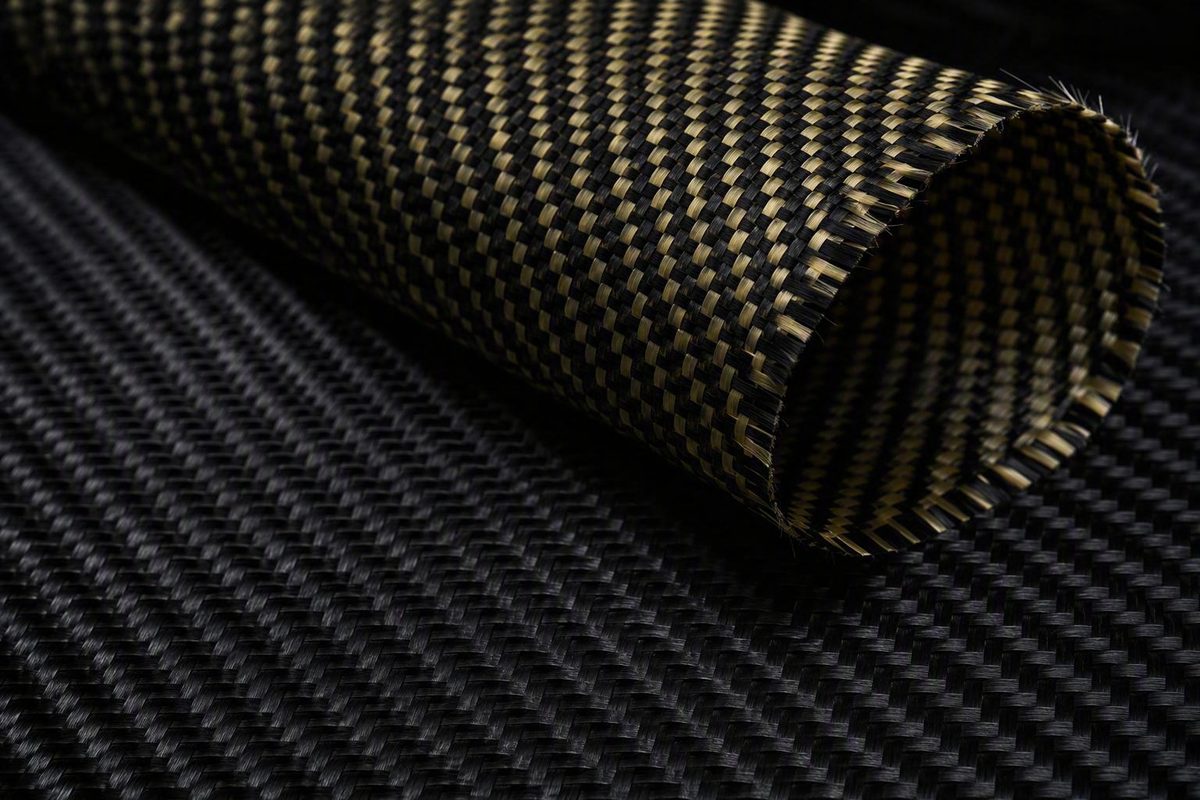
Carbon fiber/Kevlar cloth combines carbon and aramid yarns in one reinforcement, but it is a design trade-off—not an automatic upgrade over all-carbon fabric. Color and a generic promise of “strength plus toughness” are not enough to select a material.
A useful buying decision starts with the product form, exact fiber identities, weave or braid, orientation, areal weight, fiber ratio, resin compatibility, process, handling requirements, environmental exposure, and evidence for the cured laminate. For cosmetic work, a representative process coupon may answer most practical questions. For engineered parts, the specification and test burden is much higher.
Evidence note: Product specifications and commercial details in this guide are attributed to the cited seller pages, which were checked on 14 August 2026. Retail prices, stock, discounts, and shipping terms remain time-sensitive. The available sources provide limited controlled data for cured carbon–aramid laminates, so constituent-fiber descriptions and seller claims are not treated as design allowables.
What carbon fiber/Kevlar cloth is—and what it is not
Carbon fiber/Kevlar cloth is a dry hybrid reinforcement containing carbon yarns and Kevlar yarns. More broadly, carbon–aramid hybrid cloth contains carbon and an identified aramid fiber. The dry material remains flexible; it becomes a rigid composite only after it is impregnated with a compatible matrix resin and cured.
“Kevlar” is DuPont’s brand name for an aramid fiber, not a generic name for every aramid. A yellow, red, blue, or green yarn should therefore not be called genuine Kevlar unless the supplier identifies it that way. Some listings specify the fiber precisely; others use the broader term “aramid.” Fiberglass Warehouse identifies Kevlar as DuPont’s aramid brand.
Product format matters just as much as fiber identity:
- Co-woven flat cloth: Carbon and aramid yarns are woven into one sheet, commonly in two principal directions.
- Separate fabrics: Carbon and aramid are purchased independently and laminated as separate plies.
- Narrow woven tape: A strip of woven reinforcement. “Tape” describes its width and does not necessarily mean adhesive-backed material.
- Braided sleeve: A tubular reinforcement that expands over pipes, frames, handles, or other closed-section shapes.
-
Unidirectional reinforcement: Most fibers run in one principal direction rather than being interlaced as a conventional cloth.
-
Cured sheet or tube: A finished or semi-finished composite rather than dry reinforcement.
Retail categories can blur these distinctions. Easy Composites lists flat woven cloth, while the US Composites catalog includes wide cloth and narrow tape. Rock West Composites’ carbon/Kevlar “fabric” category primarily presents biaxial ±45° braided sleeves, illustrating why a category name alone is unreliable. Rock West’s category identifies its explicit hybrid products as braided sleeves.
A co-woven cloth fixes the two yarn systems into a particular architecture. Neither method is universally better: the appropriate choice depends on the loads, desired failure behavior, geometry, manufacturing process, and available laminate data.
Before comparing products, identify:
- Product format: cloth, tape, sleeve, unidirectional material, prepreg, or cured part.
- Exact carbon and aramid names or grades.
- Weave, braid, or other architecture.
- Fiber orientations.
- Areal weight and usable width.
- Nominal thickness and how it was measured.
- Stabilization or surface treatment.
- Dry, prepreg, or cured condition.
- Resin compatibility and sizing information.
- Availability and revision date of a technical datasheet.
If a listing cannot answer those basic questions, it may still be suitable for a decorative skin, but it is not sufficiently defined for a dependable engineering comparison.
What carbon and aramid each contribute to a hybrid
Carbon reinforcement is generally selected for high stiffness and strength relative to weight. Aramid is generally valued for toughness, abrasion resistance, impact tolerance, and its ability to strain farther before failure. That broad division helps explain why the fibers are combined, but it does not predict the performance of a particular cloth.
Each constituent also has limitations. Carbon is comparatively brittle and can fail abruptly, particularly where impact, defects, stress concentrations, or unsuitable laminate design are involved. Aramid has weaker transverse and compressive behavior and is notably difficult to cut, drill, sand, and trim cleanly. These are broad fiber-level comparisons, not properties of a finished hybrid laminate. Fibre Glast summarizes the stiffness, impact, abrasion, elongation, and fabrication trade-offs at constituent-fiber level.
Adding aramid does not guarantee a stronger, stiffer, lighter, safer, or more durable part. Performance depends on:
- Carbon and aramid grades
- Their ratio by weight or volume
- Yarn arrangement and crimp
- Fiber orientations
- Matrix resin and fiber sizing
- Fiber volume and resin content
- Voids and other defects
- Consolidation pressure
- Cure cycle
- Ply sequence and thickness
- Joints, holes, edges, and load introduction
- Fabrication consistency
It is essential to keep three evidence levels separate:
- Constituent-fiber properties describe carbon or aramid fibers under specified test conditions.
- Dry-cloth specifications describe architecture, mass, width, yarn count, and related purchasing details.
- Cured-laminate properties describe a defined fabric-and-resin system made and tested using a defined process.
A high fiber modulus does not become the modulus of a woven hybrid laminate. Yarn waviness, the second fiber, matrix properties, void content, fiber volume, orientation, and test direction all affect the result.
A hybrid can be useful where rigidity and damage tolerance both matter. An otherwise comparable all-carbon laminate may remain the better candidate where maximum stiffness is dominant. Conversely, an aramid-rich system or separately positioned aramid ply may deserve consideration where abrasion or impact damage dominates. These are starting hypotheses, not substitutes for testing.
| Consideration | Carbon reinforcement | Aramid reinforcement | Co-woven carbon–aramid cloth |
|---|---|---|---|
| Stiffness priority | Commonly favored | Usually lower than carbon | Depends on carbon ratio and architecture; should not be assumed to retain all-carbon stiffness |
| Impact and abrasion priority | Comparatively brittle | Commonly favored for toughness and abrasion tolerance | May provide a useful compromise, but the benefit must be measured in the actual laminate |
| Compression limitation | Often selected for stiffness and compression needs | Relatively weak in compression and transverse loading | Carbon may help, but the cloth is not exempt from aramid’s limitations |
| Cutting and finishing | Usually cleaner than aramid | Difficult to cut, sand, and drill cleanly | Aramid yarns make edges and machining more demanding |
| UV concern | Matrix and finish still matter | Aramid is UV-sensitive | Exposed aramid requires a validated protective finish |
| Evidence needed for design | Matched laminate data | Matched laminate data | Data for the exact fiber ratio, architecture, resin, cure, and process |
An online boatbuilding discussion illustrates the uncertainty but does not resolve it. Contributors debate whether hybrids provide an engineering benefit or are sometimes selected mainly for appearance. One participant reported a hybrid failure where nominally comparable all-carbon parts survived, but the thread lacks controlled specimen geometry, fiber volume, cure, void, and loading data. It cannot establish a universal failure mechanism for co-woven carbon and aramid. The discussion contains opinions and an anecdotal comparison rather than design allowables.
How to read cloth specifications before buying
Areal weight is the dry reinforcement mass per unit area, normally stated in grams per square meter or ounces per square yard. It is not the finished-part weight, cured-ply weight, fiber volume, or proof of mechanical performance.
For purchasing estimates:
Dry cloth mass = cut area × areal weight
Keep the units consistent. A 2 m² cut plan using 210 g/m² cloth contains 420 g of dry reinforcement before offcuts and process waste. The completed laminate will weigh more because it also includes resin, coatings, inserts, core materials, and possibly adhesives.
3K carbon means that each carbon tow contains approximately 3,000 filaments. It does not identify:
- The carbon-to-aramid ratio
- Aramid grade
- Tow spacing
- Cured thickness
- Resin fraction
- Fiber volume
- Laminate strength
Other fields also need careful interpretation:
- Width: Nominal roll width may differ from usable, defect-free width.
- Orientation: A 0°/90° label describes the principal yarn directions, not the part’s final load axes unless the material is aligned accordingly.
- Thread construction: Warp and fill yarns may differ in material, count, or spacing.
- Nominal dry thickness: A catalog or handling value, not a guaranteed cured-ply thickness.
- Color: Useful cosmetically, but not proof of fiber identity.
- SKU: Important because visually similar products may have different specifications.
- Continuous-roll terms: Several purchased meters or yards may—or may not—arrive as one continuous length.
Consider two individual product listings. Composite Envisions identifies a red hybrid as 50 inches wide, 3K carbon, 5.5 oz/yd² or 186 g/m², and 2×2 twill. Its SKU is F-376-50-WL, and the seller says “WL” denotes its Web-Lock stabilization treatment. Composite Envisions lists the product dimensions and construction.
Easy Composites lists another product at 210 g/m² and 1,200 mm wide, with 0°/90° orientation, Pyrofil TR30S 3K carbon, Kevlar 49, and a nominal 0.3 mm thickness. That is a fuller fiber specification, but it still does not state the carbon-to-aramid ratio. Its construction also needs confirmation: the title and specification say 3×1 twill, while several associated image labels refer to 2×2 twill. Easy Composites publishes the specifications and the conflicting construction cues.
Do not assume nominal dry or seller-listed consolidated thickness will equal the cured thickness produced by hand layup, vacuum bagging, infusion, or pressing. Resin content and consolidation alter the result. For a thickness-critical design, make and measure a representative laminate using the intended tooling, consumables, pressure, cure, and ply count.
The carbon-to-aramid ratio should be a mandatory buyer question. Two fabrics can share the same color, width, weave, and headline weight while containing materially different proportions of each fiber.
A useful specification request is:
Please confirm the exact carbon grade and tow size; exact aramid grade and brand; carbon-to-aramid ratio by weight or volume; sizing chemistry and compatible resin systems; warp and fill construction; weave and orientation; nominal areal weight and tolerance; usable width; nominal thickness and its measurement or consolidation basis; roll length and continuous-length policy; stabilization treatment; storage requirements; and availability of a current technical datasheet and laminate test data.
If the supplier cannot provide laminate data, ask whether the dry-cloth specification is controlled between batches. A product whose yarn source or construction can change without notice may be unsuitable for a repeatable engineered process.
Plain, twill, satin, tape, or braided sleeve: choosing the architecture
Architecture changes drape, weave stability, directional reinforcement, surface appearance, and processing behavior. Two fabrics are not interchangeable merely because both contain carbon and aramid and have similar areal weights.
Plain weave alternates yarns frequently. It is comparatively stable and balanced in its principal yarn directions, making it a plausible choice for flat shapes, repeatable alignment, and small cut pieces. That does not establish an exact strength advantage over twill or satin.
Twill weave produces a diagonal visual pattern and is commonly selected for improved conformability over modest curvature. A 2×2 twill and a 3×1 twill have different interlacing patterns and face appearances, but the weave name alone does not prove that one is mechanically superior.
Satin and dual-twill constructions provide further options. US Composites catalogs wide dry hybrids in plain, 2×2 twill, dual-twill, and four-harness satin forms, along with narrow plain-weave tapes. Its satin listing has a different appearance on each face, while one plain cloth places carbon in the warp direction and Kevlar in the fill direction. The US Composites catalog distinguishes the available dry-cloth constructions.
Narrow tape is appropriate for local strips, seams, perimeter reinforcement, and narrow molds. It normally means woven material supplied at a narrow width, not pressure-sensitive adhesive tape.
Braided sleeve is well suited to covering tubes, handles, spars, and closed sections because it expands and contracts around the substrate.
Stabilization can simplify handling. Composite Envisions describes its Web-Lock treatment as preserving weave alignment after folding, wrinkling, or cutting. That supports a processing claim only; it is not evidence that the treatment improves cured-laminate strength.
| Part or priority | Plausible product form | Why it may fit | Verify before use |
|---|---|---|---|
| Flat panel | Plain or twill flat cloth | Easy nesting and controlled principal directions | Actual load axes, fiber ratio, usable width, cured properties |
| Curved cosmetic skin | Twill or suitable satin | Drape and recognizable surface pattern | Print-through, distortion, resin color, edge finish |
| Narrow strip or seam | Woven tape | Reduces cutting and offcut waste | Whether yarn orientations match the local load |
| Tube or closed section | Braided sleeve | Conforms around continuous geometry | Braid angle at installed diameter, overlap, torsional and axial needs |
| Directionally loaded structure | Flat cloth, unidirectional reinforcement, or separate plies | Allows architecture to be tailored | Engineering analysis and laminate testing |
| Mixed cosmetic and mechanical requirement | Co-woven hybrid or separate-ply system | Can combine visual and functional goals | Whether the visible ply contributes usefully or merely adds process complexity |
For structural work, choose architecture from the load path rather than from a product photograph. A sleeve that fits beautifully can still provide the wrong axial orientation; a stable plain weave can still be inefficient if most of the load runs diagonally.
Resin selection, wet-out, and manufacturing routes
The reinforcement and matrix perform different jobs. Fibers carry loads most efficiently along their preferred directions. General composite manufacturing guidance distinguishes wet layup, prepreg processing, and closed-mold resin-transfer methods, but the suitability of each route still depends on the exact material system. Formlabs outlines the reinforcement–matrix relationship and principal manufacturing routes.
Compatibility must be confirmed for the exact cloth, sizing, and resin. Individual sellers list epoxy, polyester, and vinyl ester as compatible with particular products, and some express a preference for epoxy or vinyl ester. Those product-level statements should not be generalized to every aramid treatment or carbon sizing.
Choose the matrix by considering:
- Supplier-confirmed sizing compatibility
- Adhesion and required laminate properties
- Working time and cure schedule
- Viscosity and reinforcement permeability
- Shop temperature and humidity limits
- Vacuum or injection requirements
- Service temperature and environment
- Moisture, chemical, and UV exposure
- Cosmetic clarity and color stability
- Post-cure and tooling capability
- Bonding and finishing requirements
Common routes include:
-
Wet layup: Resin is applied directly to dry reinforcement by brush, roller, squeegee, or a similar tool. It is accessible but operator-dependent.
-
RTM: Dry reinforcement is placed in a closed mold and resin is injected under pressure. Tooling and process control are more demanding.
- Cosmetic skinning: Fabric is laminated over an existing substrate mainly to create a composite appearance or surface layer.
A vendor may list several compatible processes, but that does not make every one equally practical. A stable cloth that wets readily in a small hand layup may behave differently in a large infusion. Conversely, a highly conformable weave may distort while being positioned or under resin flow.
For a bounded resin estimate:
- Determine the net cut area for every ply.
- Multiply area by areal weight to obtain dry cloth mass.
- Add realistic reinforcement waste for trimming and pattern alignment.
- Apply a resin-to-fiber mass assumption based on the intended process and prior shop data.
- Add resin separately for mixing loss, rollers, brushes, feed lines, peel ply, flow media, catch pots, and other consumables.
For example, if a cut plan contains 1.5 m² of 210 g/m² cloth:
1.5 m² × 210 g/m² = 315 g dry fiber
If a validated shop process uses a resin-to-fiber mass estimate of R, the laminate resin estimate is:
315 g × R
Process waste is then added separately. Easy Composites gives approximately equal weights of resin and dry fabric as a wet-lay starting estimate for its listed product. That seller-specific estimate is not a universal optimum, an infusion target, or a structural fiber-volume specification.
For visible colored weave, individual sellers recommend clear-curing resin and warn that resin can darken the fabric. Always make a cured appearance coupon because the matrix can alter contrast, reveal weave distortion, or introduce an unwanted tint.
Finally, do not use an extreme dry-fiber temperature as the laminate’s service-temperature rating. The complete cured resin system, cure state, loading, exposure duration, and laminate construction normally constrain usable temperature.
Cutting, layup, trimming, and protection
Aramid-containing cloth is harder to cut cleanly than ordinary carbon cloth. Dedicated aramid or Kevlar shears are the clearest seller-backed choice for substantial work. Very sharp ordinary scissors may work slowly for a few cuts, but they should not be treated as equivalent in productivity or edge quality.
A practical dry-cutting workflow is:
- Make accurate templates before unrolling the material.
- Mark the required 0°, 90°, or bias orientation on each template.
- Lay the cloth on a clean, smooth surface with full support.
- Align the visible weave before tracing or cutting.
- Minimize repositioning, folding, and repeated handling.
- Use the supplied stabilization treatment where permitted; do not add chemicals without compatibility approval.
- Cut with sharp dedicated shears using deliberate, continuous strokes.
- Label each ply and its orientation.
- Store cut pieces flat or suitably supported until layup.
Plan trim lines, overlaps, holes, and exposed edges before lamination. Cured aramid can pull, fuzz, or resist clean sanding. Whenever possible, arrange the design so the final edge can be molded, buried, bonded, or sealed rather than aggressively ground after cure.
Forum discussions mention cellulose dope on cut lines, improvised vacuum consumables, and resin-wetting cloth between plastic sheets as a homemade prepreg-like technique. These ideas are anecdotal and disputed, not validated procedures. Follow the cloth, resin, tooling, and bagging-material suppliers’ instructions instead. The forum thread documents the range and uncertainty of improvised cutting and bagging advice.
Control carbon and aramid dust and loose fibers according to the safety data and operating instructions supplied with the resin, cutting tools, extraction equipment, and protective equipment. Aramid is sensitive to ultraviolet exposure, making the finish and service environment part of the material-selection decision. Markforged’s constituent-fiber overview notes carbon’s conductivity and aramid’s UV sensitivity.
One listed hybrid cloth rates its UV resistance as poor. “Clear resin” describes appearance; it does not by itself prove durable UV protection.
Before committing to the part, make a small coupon using the intended:
- Cloth orientation
- Resin and mix procedure
- Mold surface and release system
- Wet-out method
- Vacuum or consolidation level
- Cure and post-cure
- Cutting and trimming tools
- Edge sealer and topcoat
Inspect the coupon for wet-out, trapped air, distortion, cured color, thickness, print-through, trimming behavior, edge fuzz, coating adhesion, and surface quality. A cosmetic coupon is not structural qualification, but it can prevent an expensive process mistake.
Comparing products and prices without misleading yourself
Retail listings are useful for dimensions and sales terms, but prices, stock figures, discounts, and delivery charges are time-sensitive. The following information was checked against the cited seller pages on 14 August 2026. Prices are USD and should be reconfirmed immediately before ordering.
The rows are not all like-for-like comparisons. The first two describe individual products, while the US Composites and Rock West rows summarize multiple catalog or category listings.
| Captured listing | Product form | Fiber identification | Architecture and orientation | Weight and width | Nominal thickness | Color or stabilization | Commercial information checked 14 August 2026 | Important gaps |
|---|---|---|---|---|---|---|---|---|
| Composite Envisions F-376-50-WL | Dry flat cloth | 3K carbon; seller identifies the colored aramid as DuPont Kevlar | 2×2 twill; orientation not explicitly summarized | 186 g/m²; 50 in | Not stated | Black/red; Web-Lock | USD $50 displayed; sales unit unclear; stock figure displayed | Fiber ratio, carbon grade, thickness basis, laminate data |
| Easy Composites CK-31-210-120 | Dry flat cloth | Pyrofil TR30S 3K and Kevlar 49 | Listed as 3×1 twill and 0°/90°; image labels conflict with 2×2 | 210 g/m²; 1,200 mm | 0.3 mm nominal and consolidated | Black/yellow | USD $38.85 per linear meter displayed, with quantity tiers and an oversize handling charge | Fiber ratio, sizing details, confirmed weave, laminate data |
| US Composites hybrid catalog | Category summary: dry wide cloth and narrow woven tape | Listings include 3K carbon with stated Kevlar or aramid yarn counts | Plain, 2×2 twill, dual-twill, and four-harness satin | Illustrated wide products span about 4.8–7.7 oz/yd² and are generally 50 in wide; tapes are 4 or 6 in wide | Product-specific catalog values | Multiple colors; no Web-Lock claim | Illustrated wide-cloth prices of USD $38.50–$39.50 per yard; 4 and 6 in tapes shown at USD $7.20 and $10.10 per running yard | Fiber ratio, sizing, resin fraction, cured properties |
| Rock West hybrid category | Category summary: dry braided sleeves | Carbon/aramid or carbon/Kevlar hybrid | Biaxial ±45° braid | Not supplied on the category page | Not supplied | Red or yellow | Starting prices shown as USD $5.59 and $6.12 per yard; option-specific prices may differ | Sleeve diameter, expanded width, weight, fiber ratio, coverage, selected-option price |
For flat cloth, normalize price by supplied area:
Area supplied = linear length × usable width
Cost per unit area = purchase cost ÷ area supplied
If one linear meter of cloth is 1.2 m wide, its nominal area is 1.2 m². If one linear yard is 50 inches wide, convert both dimensions into the same unit before calculating square yards or square meters.
Do not compare a sleeve price per linear yard directly with a flat-cloth price per square yard. Sleeve coverage depends on nominal diameter, expansion range, installed braid angle, circumference, overlap, and selected option—details not supplied by the category-level listing.
Delivered usable cost should also include:
- Quantity tiers and minimum order
- Currency conversion and taxes
- Shipping and oversize handling
- Continuous-roll policy
- Damaged-edge allowance
- Pattern and orientation waste
- Color or batch matching
- Storage and shelf-life requirements for resin-bearing forms
- Consumables and process scrap
Identical colors or similar headline weights do not establish equivalent performance. Fiber ratio, grades, sizing, yarn spacing, weave, and cured-laminate data may all differ or be missing.
Before purchase, verify:
- The actual weave where titles and images conflict
- Whether price is per yard, meter, square unit, piece, or roll
- Maximum continuous length
- Current stock and lead time
- Usable—not merely nominal—width
- Exact carbon and aramid identities
- Carbon-to-aramid ratio
- Resin and sizing compatibility
- Dry-fabric or prepreg storage requirements
- Return restrictions on cut material
- Availability and revision date of the technical datasheet
A decision framework for choosing hybrid cloth—or rejecting it
Begin with the dominant requirement, not the desired material name. Is the priority stiffness, impact tolerance, abrasion, cosmetic appearance, geometry, processing route, edge quality, outdoor durability, or delivered cost?
For cosmetic skins and non-structural panels, prioritize:
- Weave appearance and repeatability
- Drape over the actual geometry
- Stability during cutting
- Clear-resin behavior
- Roll width and nesting efficiency
- Clean trim and sealed-edge feasibility
- UV-stable finish
- A representative cured coupon
A decorative hybrid skin should not be assumed to improve the underlying structure.
For impact-prone parts, hybrid cloth may be worth considering because aramid is associated with toughness and abrasion tolerance. But the expected benefit, location of each fiber, damage mode, and residual strength must be established for the exact laminate. A drop coupon, flat-panel comparison, or component-level test should reproduce the relevant support, impactor, temperature, and boundary conditions.
For stiffness-dominated parts, compare the hybrid directly with a matched all-carbon laminate. Keep resin, process, thickness or fiber mass, cure, and test method controlled. Do not assume a hybrid preserves all-carbon stiffness simply because carbon yarns remain visible.
For co-woven versus separate-ply hybridization, treat both as design options:
- Co-woven cloth provides an integrated architecture and often a distinctive cosmetic pattern.
- Separate plies allow carbon and aramid to be positioned and oriented independently.
- Available product listings and anecdotal reports do not establish a universal best stacking sequence or impact-facing ply.
Reject generic advice such as “use three to six layers.” Required thickness depends on geometry, span, supports, load direction, allowable deflection, impact energy, joints, cutouts, core, balance, symmetry, manufacturing variability, and safety factors. Two laminates with the same ply count can differ substantially in areal weight, orientation, fiber ratio, resin content, and cured thickness.
Load-bearing, fatigue-critical, marine structural, pressure, aerospace, ballistic, and protective applications require qualified design and application-specific testing for the exact cloth, resin, cure, fiber volume, and process. Depending on the anticipated failure modes, useful evidence may include:
- Tensile strength and modulus by direction
- Compression strength and modulus
- Flexural response
- Impact damage and residual strength
- Interlaminar shear or fracture behavior
- Fatigue performance
- Abrasion resistance
- Moisture, chemical, thermal, and UV aging
- Joint, hole, insert, and edge performance
- Process variability and defect-acceptance criteria
A compact go/no-go sequence is:
- Identify the failure priority. Stiffness, impact, abrasion, fatigue, appearance, or environment?
- Classify the product form. Flat cloth, tape, sleeve, separate ply, prepreg, or cured product?
- Verify the specification. Fiber grades, ratio, weave, orientation, weight, width, sizing, and thickness basis?
- Choose the resin and process. Confirm compatibility and practical manufacturing requirements.
- Estimate material and waste. Normalize area, resin, shipping, consumables, and orientation scrap.
- Make a representative coupon.
- Evaluate process and finish. Check wet-out, consolidation, color, trim, edges, and coating.
- Assess the consequence of failure. If failure carries meaningful risk, obtain qualified engineering analysis and application-specific testing before proceeding.
Carbon–aramid hybrid cloth should ultimately be selected as a defined reinforcement architecture, not as a generic promise of carbon stiffness plus Kevlar toughness. Confirm what the product actually is, then match it to the geometry, resin, process, exposure, finishing demands, and evidence required by the application.
Frequently asked questions about carbon fiber/Kevlar cloth
Is carbon fiber Kevlar cloth stronger than regular carbon fiber cloth?
Not necessarily. “Stronger” must identify the loading mode, direction, and failure criterion. A hybrid may be considered where impact tolerance, abrasion resistance, or damage behavior matters, while a matched all-carbon laminate may be stiffer. Constituent-level comparisons distinguish carbon’s stiffness from aramid’s impact and abrasion advantages.
The result depends on fiber grades, carbon-to-aramid ratio, architecture, orientation, resin, fiber volume, cure, voids, thickness, and workmanship. Only matched laminate or component testing can quantify the difference.
What resin should I use with carbon fiber Kevlar cloth?
Use a resin confirmed as compatible with the exact fabric and its sizing. Some individual product listings identify epoxy, polyester, and vinyl ester as compatible, but that does not make every resin in those families suitable.
Choose according to adhesion, viscosity, working time, cure method, service temperature, environmental exposure, structural requirements, and cosmetic finish. The matrix and manufacturing route must be considered as part of the complete composite system. Formlabs describes the role of the matrix and differences among wet layup, prepreg, and resin-transfer processing.
For visible cloth, make a cured clear-resin coupon before committing to the part.
Can carbon fiber Kevlar cloth be cut with ordinary scissors?
Very sharp ordinary scissors may work slowly for limited cuts, but dedicated aramid or Kevlar shears are preferable for substantial work and cleaner edges. US Composites explicitly recommends considering Kevlar shears for larger amounts of work while noting that very sharp regular scissors cut slowly.
Support the cloth, minimize handling, preserve orientation, and protect cut plies from distortion. Plan cured trim lines in advance because aramid can pull or fuzz and is difficult to sand cleanly.
How many layers of carbon fiber Kevlar cloth do I need?
There is no universal layer count. The answer depends on cloth weight, orientation, cured thickness, fiber ratio, geometry, span, load, stiffness target, core, supports, joints, process, and allowable failure risk.
For a cosmetic skin, make a coupon to determine coverage and surface quality. For a load-bearing part, calculate the laminate and validate it with tests representative of the exact material system and service conditions. A seller’s suggested ply range for non-structural covers is not a structural design rule.
Does carbon fiber Kevlar cloth need UV protection?
Exposed aramid generally warrants UV protection because aramid is sensitive to ultraviolet exposure. Markforged identifies UV sensitivity as a limitation of Kevlar reinforcement.
Use a coating or opaque finish validated for the resin system, substrate, exposure, and required service life. Do not assume that any clear resin or clear coat is sufficient.